
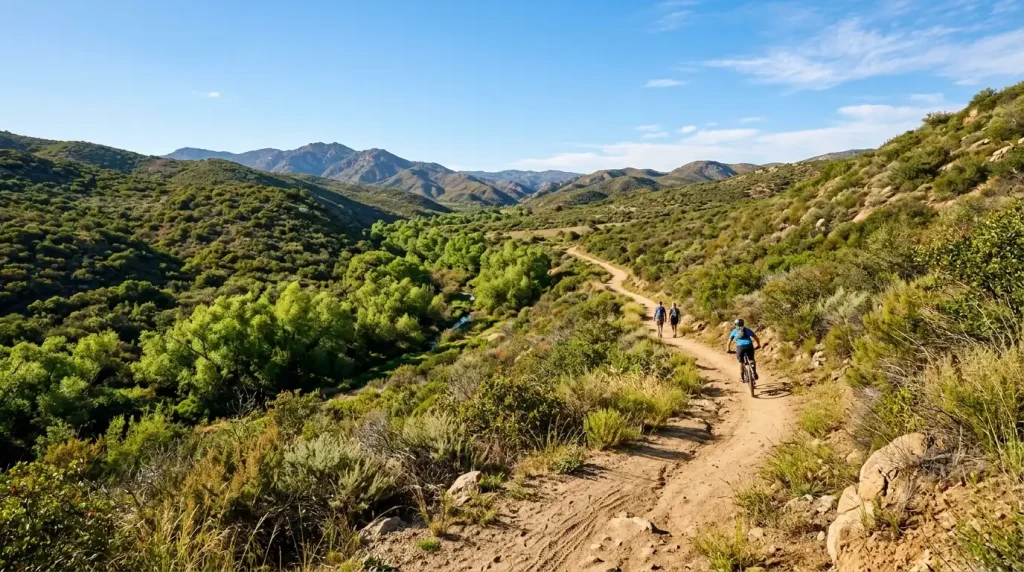
1. The Multi-Use Trail System: Hiking, Biking, and Riding
At the heart of the park’s appeal is its continuous multi-use trail network. Extending along the Otay River bed, these flat to gently sloping dirt trails accommodate outdoor lovers of all skill levels. Because the trails connect multiple staging areas, you can customize your excursion from a quick 1-mile walk to an ambitious 8-mile cross-valley trek.
For mountain bikers and gravel cyclists, the wide dirt pathways provide a smooth, enjoyable ride free from motor vehicle traffic. Gravel paths wind through native chaparral, coastal sage scrub, and shady riparian habitats. Families with strollers and leashed dogs will also find the main arterial trails comfortable and accessible year-round.
2. Discovering the Ponds: Fishing and Birdwatching Hotspots

One of the most surprising features tucked within the valley floor is a series of gravel-pit reflection ponds fed by underground aquifers and seasonal river flows. These quiet bodies of water create rich wetland ecosystems that attract an impressive diversity of local and migratory birds.
Birdwatchers equipped with binoculars can spot great blue herons, snowy egrets, mallards, and red-tailed hawks circling overhead. The ponds are also popular among local anglers practicing catch-and-release fishing. Benches and shaded viewpoints positioned along the water’s edge offer quiet places to relax, take photos, or enjoy an outdoor picnic under the shade of eucalyptus and willow trees.
3. Flora, Fauna, and Native Wildlife Conservation
Otay Valley Regional Park serves as a critical biological corridor within San Diego County’s Multiple Species Conservation Program (MSCP). As you trek through the valley, you will observe distinct natural habitats ranging from coastal sage scrub to freshwater wetlands.
During the spring months, the valley floor comes alive with yellow bush sunflowers, California poppies, and fragrant wild sage. Beyond native flora, the park is home to sensitive wildlife species, including the California gnatcatcher, coastal cactus wren, and mule deer. Staying on designated trails ensures these precious native habitats remain protected for generations to come.
To view trail maps, current park rules, and scheduled ranger-led nature walks, visit the official County of San Diego Parks and Recreation Department portal.
4. Key Entry Points and Staging Areas
 Because the park spans several miles across Chula Vista, choosing the right staging area depends on the activities you have planned for the day. Here are the three most popular park access points:
- Beyer Boulevard Staging Area: Located on the western end near the salt works, this entry is ideal for quick access to scenic pond views and flat walking loops.
- Fenton Staging Area: Positioned centrally along Main Street, this park entrance features paved parking, restrooms, shaded picnic tables, and direct access to main bike trails.
- Paseo del Rey Staging Area: Situated further east near suburban neighborhoods, this quiet entry point offers elevated views overlooking the winding river valley.
5. Essential Tips for Your Outdoor Visit
To make the most of your adventure in Otay Valley Regional Park, keep these helpful visitor tips in mind before hitting the trail:
- Pack Plenty of Water: While tree canopies shade portions of the riverbed, much of the trail system is exposed to direct Southern California sunlight. Bring adequate hydration for yourself and your pets.
- Protect Against the Sun: Wear sunblock, a wide-brimmed hat, and lightweight clothing, especially during midday summer hikes.
- Respect the Wildlife: Always give wild animals space, keep dogs securely on a leash, and pack out all trash to keep the valley clean.
- Check Weather Conditions: During heavy winter rains, low-lying river crossings can occasionally flood or become muddy. Check trail conditions following seasonal rainstorms.